

Outdoor Air Quality
Occasionally wildfire smoke from distant locations can impact air quality around Cornell. Because smoke particles are very small (<1 micron) they can be inhaled and deposit deep in the lungs causing health effects particularly for sensitive individuals. The Environmental Protection Agency's Air Quality Index (AQI) provides an easy way to understand potential health impacts from various pollutants including:
- ground-level ozone
- particle pollution (particulate matter <2.5 microns (PM2.5) or < 10 microns (PM10))
- carbon monoxide
- sulfur dioxide
- nitrogen dioxide
The higher the Air Quality Index, the more likely are health impacts. For particulate pollution like wildfire smoke, quantities of PM2.5 are most relevant and the table below shows air quality index values and anticipated health effects.
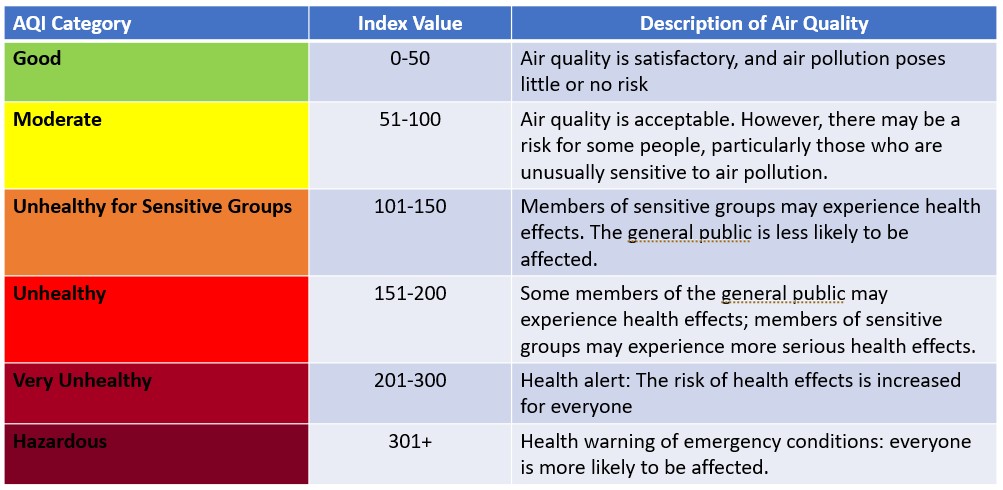
When elevated levels of air pollution are anticipated in our area, and are above an AQI of 150, EHS will issue an alert. For further information on wildfires, smoke, and health impacts, please see the links below.
More Information
Current conditions can be found at EPA's AirNow.gov
Sources of wildfire smoke: AirNow Fire and Smoke Map
Forecast Air Quality Conditions: NWS Air Quality Program
Air Quality Index and Health: EPA AQI and Health